
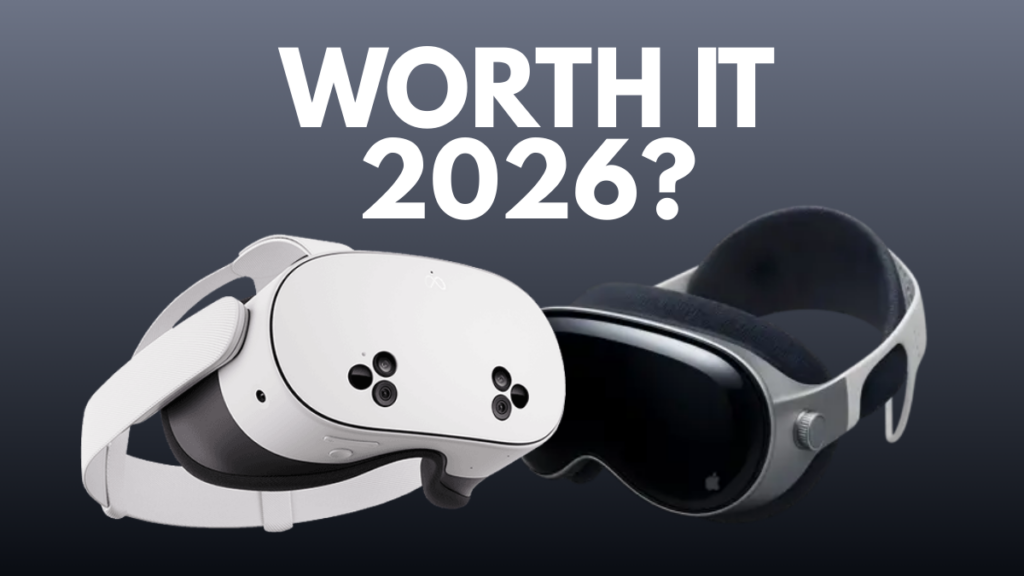
PCVR vs Standalone VR: Which One Should You Actually Choose?
If you’re thinking about taking the plunge, and diving into the world of virtual reality, one of the first decisions you’ll run into is whether to go with PCVR or standalone VR.
On the surface, it sounds like a simple choice. PCVR = power, and standalone VR = convenience. In reality, the decision is a bit more nuanced.
Both approaches offer very different experiences, and which one makes sense depends more on how you plan to use VR.
What Standalone VR Does Well
Standalone VR headsets are designed to be simple. You don’t need a PC, you don’t need link cables, and you don’t need to deal with downloading third-party software to play your games. You just put the headset on, turn it on, and you’re in.
The ease of use is the biggest reason standalone VR has become so popular. It removes most of the friction that has traditionally held VR back.
Ease of Use
Because pretty much everything you need is built into the headset, standalone VR is easy to pick up and put down. This makes it far more suitable for short sessions, quick demos, or casual use.
You’re far more likely to actually use a headset that doesn’t require setup every time, and that matters more than many people expect.
However, that doesn't mean your VR experience will be less immersive or fun, in fact, it's what most people prefer.
Beginner Friendly
Standalone VR is generally more beginner-friendly. There’s less to troubleshoot, fewer technical barriers, and less knowledge required to get started.
This makes standalone headsets easier to recommend to people who are new to VR or who don’t want to deal with buying a VR capable PC.
The Trade-Offs of Standalone VR
The downside is performance. Standalone headsets have limited processing power compared to a full gaming PC.
This means some games won't perform as well graphically. Also, some PC-only experiences simply aren’t available in standalone form.
For many users, though, these compromises are acceptable given the convenience.
What PCVR Does Better
PCVR takes a different approach. Instead of building everything into the headset, it relies on an external PC to handle the heavy lifting.
This allows for significantly more powerful gaming experiences, but at the cost of simplicity.
Visual Quality and Performance
PCVR offers a much better visual experience, more detailed environments, and better performance ceilings. This is especially noticeable in games genres like racing, flight simulators, and large-scale open worlds.
If visual immersion is your top priority, PCVR still has a clear advantage.
Flexibility and Modding Support
PCVR platforms tend to be more open. Modding communities are stronger, experimental software is more common, and users generally have more control over how their experience is set up.
This makes PCVR appealing to enthusiasts who enjoy customising and tweaking their hardware and software.
The Downsides of PCVR
PCVR is more expensive, more complex, and more prone to technical issues. Driver problems, software updates, and cable management can all become points of frustration.
When everything works smoothly, PCVR can feel incredible. When it doesn’t, it can quickly become a hassle.
So, Which One Makes Sense for You?
Standalone VR makes the most sense if you value convenience, simplicity, and ease of use. It’s perfect for casual gaming sessions and for people who want VR without technical overhead.
PCVR makes more sense if you already own a capable PC, want the best visual quality, and don’t mind spending time optimising your setup.
In practice, many VR users end up using both. Standalone VR handles everyday use, while PCVR is reserved for more demanding experiences.
There’s no universally better option, just the one that fits how you actually plan to use VR.
More VR Stories
How AI Will Revolutionize Virtual Reality
AI and VR teaming up? It’s creating stuff that seemed totally out of reach just a few years ago. Those headsets keep advancing. Algorithms…
Read Article
Why VR Still Hasn’t Gone Mainstream
For over a decade, VR has felt like it’s “almost there”. Almost comfortable enough Almost convenient enough. Almost mainstream. But “almost” isn’t good enough…
Read Article
Why Most People Quit VR (And What Actually Keeps Them Using It)
When somebody puts on a VR headset for the first time, awe & excitment fill their minds. It’s like they’ve stepped into a completely…
Read Article