
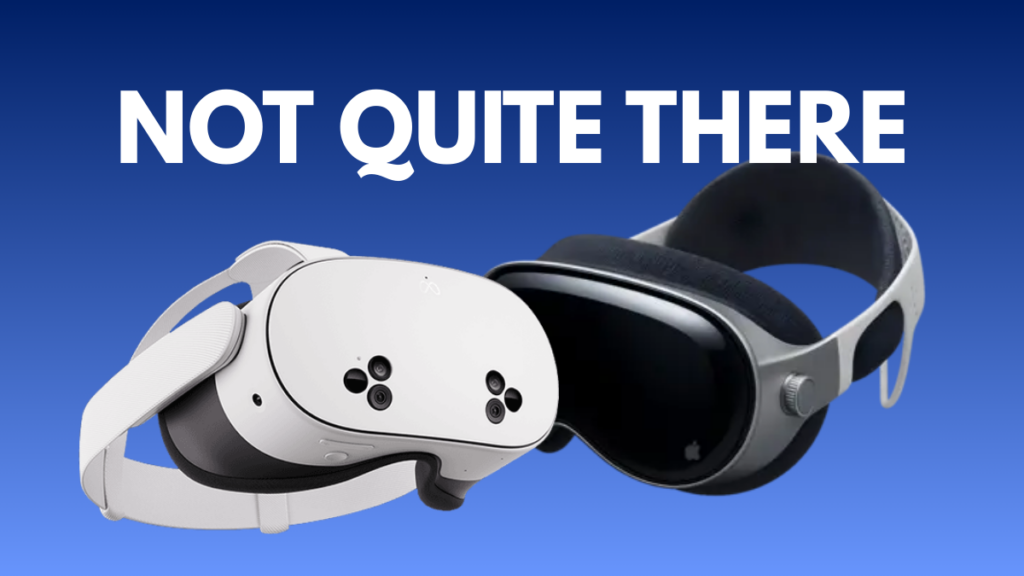
Why VR Still Hasn’t Gone Mainstream
For over a decade, VR has felt like it's "almost there".
Almost comfortable enough
Almost convenient enough.
Almost mainstream.
But "almost" isn't good enough for mass adoptation.
Why VR Still Hasn't Gone Mainstream
VR has made leaps and bounds over the last few years. The displays are clearer, tracking is much more accurate, and standalone headsets like the Meta Quest 3 mean you no longer need a £2000 PC just to get started.
On paper, VR should be everywhere by now.... but it isn't.
Most people still see VR as a novelty rather than something the use on a daily basis. Even VR veterans admit they go through long periods where they barely touch their headset at all.
There isn't just one big flaw that's preventing VR from going mainstream, it's a collection of small issues that add up.
Friction Is Still VR's Biggest Problem
The biggest thing holding VR back isn't the graphics, or the price... it's effort.
Using VR still requires:
- Clearing space
- Putting on a headset
- Picking up controllers
- Making sure batteries are charged
None of this is hard, but it's more work than simply sitting down and turning your TV on, or picking up your phone.
When people come home tired from work, convenience wins. VR usually loses in that factor alone.
Comfort Has Improved, But It's Still Not Quite There
Modern headsets are for better than what they were 5 years ago, but comfort is still a real issue for mainstream users.
Things like:
- Weight on the face
- Heat and sweat
- Glasses compatibility
- Pressue points
For enthusiasts, these are managebale trade-offs. For everyone else, they're reasons to stop using it,
The Content Retention Problem
VR has thousands of impressive apps, games and experiences, but people don't tend to return to them after playing them only a few times.
Flat screen gaming, by contrast, is easy to step into and stay in for hours. It just feels natural, whereas VR often feels like an event rather than a default option.
VR Isn't Competing With Consoles, It's Competing With Comfort
One mistake people make is assuming VR competes directly with consoles (Playstation, Xbox, Switch, etc).
In reality, it competes with:
- Watching YouTube
- Doomscrolling
- Lying on the sofa doing nothing
Mainstream entertainment wins when it fits into your daily life with minimal resistance. VR still demands attention, space, and energy. These are the things people don't always want to give up in exchange for an experience.
What Actually Needs To Change
VR doesn't need another massive leap in graphical or processing power, what it needs is less friction.
That means:
- Faster startup time
- Better comfort out of the box
- Content designed for repeat use
- Less setup, fewer steps, and less thinking.
VR does't need to be revolutionary anymore, it needs to be easy.
Until VR feels as natural as picking up a controller, or unlocking a phone, it'll remain outside the mainstream.
Still impressive and promising, but optional.
More VR Stories
How AI Will Revolutionize Virtual Reality
AI and VR teaming up? It’s creating stuff that seemed totally out of reach just a few years ago. Those headsets keep advancing. Algorithms…
Read Article
What Will VR Be Like in 10 Years?
Remember that time we figured VR headsets would turn us into total badasses? Nope, didn’t think so. Still, even as we’re fumbling around with…
Read Article
Why Most People Quit VR (And What Actually Keeps Them Using It)
When somebody puts on a VR headset for the first time, awe & excitment fill their minds. It’s like they’ve stepped into a completely…
Read Article