
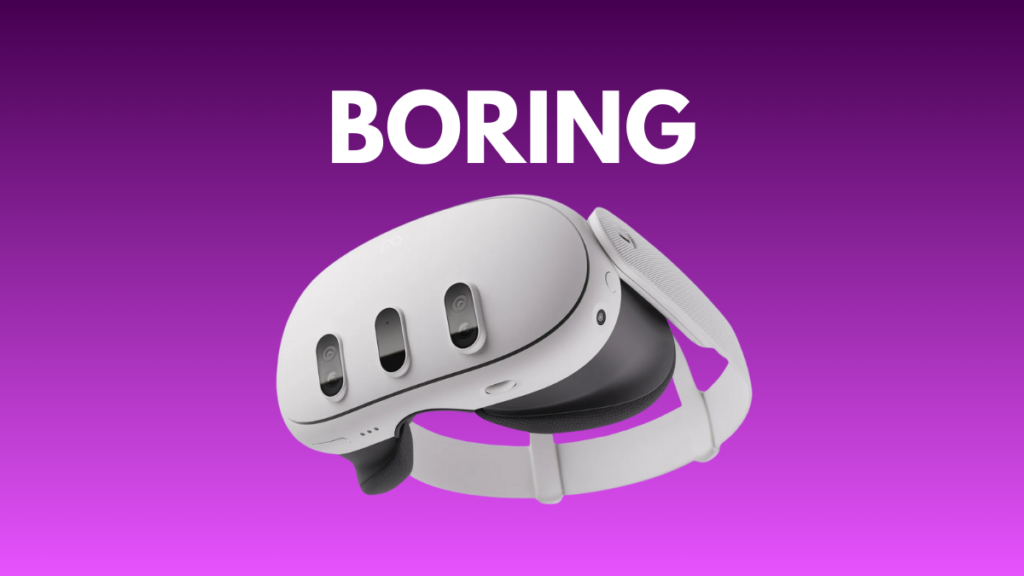
Why Most People Quit VR (And What Actually Keeps Them Using It)
When somebody puts on a VR headset for the first time, awe & excitment fill their minds. It's like they've stepped into a completely new reality, something they thought was only possible in science fiction.
They load up a game, play for hours, and scream from the rooftops that VR is the future.
So why is it that most people quit VR, ditch the headsets and let them sit on a shelf after the first few weeks?
The Honeymoon Phase of VR
Most people start of strong with VR.
They'll experience a new reality that they didn't know existed. Immersive games where you genuinely feel like the main character, the ability to spawn a 200" tv screen in your living room, and the feeling of "Woah, I'm living in the future".
Unfortunately, like all new things, the novely wears off.
Why The Novelty Wears Off
After the initial excitement, VR begins to feel more of a chore than a reward.
Instead of picking up the headset, they pick up their phones, their xbox controllers or literally just turn on their TV's.
Why? Becasue it's easier.
VR asks more from the user, and when that "Wow" factor begins to fade, the effort becomes more and more noticable.
This is where most people let their headsets rot on a shelf.
The Real Reasons People Quit VR
Most people don't quit VR because it's bad, they quit because it doesn't fit in smoothly with their daily lives they've come to know.
Session Timing
The majority of people who buy VR tech expect to use it for long sessions, like they would their PS5, TV, or PC. But that's not the reality.
VR works best in shorter burts.
When expectations don't meet reality, dissapointment sets in, even if the experience was good.
Lack of Long Term Commitment
There's hundreds of fun and exciting VR experiences, but once someone finishes a few standout games or apps, they may struggle to find the next reason to put the headset on.
What Actually Keeps People Using VR
The people who stick with VR usually don't treat it like a replacement for everything else.
They treat it as a tool.
Purpose-Driven Use
This, honestly, is the key to creating a good relationship with your VR headset.
Most people find that VR works best when it has a clear purpose. It could be fitness, specific games, creative tools, or the social aspect.
When VR solves a specific problem, or fills a role, it stops feeling optional and begins to feel like more useful.
Short, but Intentional Sessions
Often, people who stick with VR use it in shorter bursts.
Instead of planning long sessions, they jump in for 20-30 minutes, achieve what they set out to achieve, and move on.
Doing this makes VR feel lighter and easier to maintain as a habit.
Enjoyment Over Specs
Long term VR users tend to care less about specs, and more about how the experience feels.
Comfort, ease of use, and enjoyment matter more than raw performance when it comes to sticking with VR.
Yes, it can be handy to have a powerful £2000 PC that makes PCVR a breeze, and yes, it's very fun when everything is dialed. But in all honesty, it's not a nessesity. There's plenty of fun to be had on free VR games.
Why This Matters for the Future of VR
VR doesn't need to replace the iPhone to succeed.
Instead, it's future depends on fitting naturally into people's daily lives. The more VR is designed around real behaviour, the more people will actually keep using it.
Final Thoughts
Most people don't quit VR because it's bad. They quit because they expected it to behave like other tech, when in reality, it's a whole new era of hardware.
For the people who understand what VR is good at, and what it isn't, it becomes something they come back to time and time again.
VR doesn't need everyone. It just needs to make sense for the people who choose it.
More VR Stories
How AI Will Revolutionize Virtual Reality
AI and VR teaming up? It’s creating stuff that seemed totally out of reach just a few years ago. Those headsets keep advancing. Algorithms…
Read Article
What Will VR Be Like in 10 Years?
Remember that time we figured VR headsets would turn us into total badasses? Nope, didn’t think so. Still, even as we’re fumbling around with…
Read Article
Why VR Still Hasn’t Gone Mainstream
For over a decade, VR has felt like it’s “almost there”. Almost comfortable enough Almost convenient enough. Almost mainstream. But “almost” isn’t good enough…
Read Article